Tuesday, March 2, 2010

Back in the Saddle, Again

You can still ride one of these things at your local 찜질방 (jjimjilbang).


Thursday, February 25, 2010

Bad Americans: John Yoo

Story and Links on PERRspectives.

Many stereotypes, myths, rumors, et al. about Korean men out there and John Yoo's disgraceful behavior as a US Attorney and lawyer for the President of the US is bound to linger. His name is likely to become a phrase. I can only imagine how many Koreans and Korean-Americans already cringe when "John Yoo" is uttered.

Presently, Yoo refers to his legal opinions that helped the Bush Administration justify using torture as "a gift to the Obama Presidency". Apparently, he thinks he's an American Hero.

Maybe Neo-Conservatives and torture-loving scum will agree with his self-evaluation, but most Americans and most legal professionals and scholars think he's more likely perverted Law and American conceptions of Justice and Humanity, The Constitution, than anything else.

The fact is that Yoo's a loyal sycophant, more than willing to defend his right to have helped the Bush Administration find a legal means to torture suspects for whatever reasons the Bush Administration deemed necessary. He has said as much and wonders how it is that any good American would claim to act otherwise. And now it wasn't just for Bush that he acted, but on behalf of all future Administrations. Talk about a lasting legacy.

Post Hoc, Yoo has claimed that it would be permissible for the President to permit an interrogator to crush a suspect's child's testicles in front of the suspect in order to get info. The point is, John Yoo has principles and he's willing to crush your gonads to protect them. He'll stick to his guns, even if it means helping a renegade President bomb a city of hundreds of thousands because he or she thinks it might help save American lives, he's willing to find a way to get 'er done. Here is an American Conservative valuing life and cultivating A Culture of Life.

John Yoo is a bad American, a bad Korean, a bad human. Facts are facts, though, no matter how The National Review spins the story. Yoo barely survived disbarment. His colleagues at Berkeley want him fired. He's widely hated in professional and scholarly legal circles. He repeatedly sticks his feet in his mouth during interviews.

He is a joke, like most public Conservatives he has had to resort to standing on principle because the reality of his discourse is not pretty: principles that most people fear because they are based in isolationism, hate, pain, immobility, ideology, and death.


Wednesday, February 24, 2010

South Korea opens prison for foreign convicts

from the BBC:
The number of foreigners in South Korean jails has more than doubled in the past four years to about 1,500.

The prison's director said the inmates would still be able to pursue the "Korean dream" that had led them to the country in the first place.

The prison is about 100km (62 miles) south of the capital, Seoul, in Cheonan.

Inmates are given classes in Korean culture but can also view satellite TV from around the world and eat non-Korean meals. A number of the guards are fluent in English, Russian or Chinese.

***

The government has said the facility aims to respect the inmates' human rights and treat them in a humanitarian manner regardless of their language, culture or religion.

"We will operate this facility for the inmates to recognise that their 'Korean dream' was not a failure," said the prison's director, Kim Pyung-gun. "We will give them a message of hope."

Ok, so what's this "Korean Dream" Kim Pyeong Gun is talking about. It's the first I've heard about it.

Tuesday, February 23, 2010

서울시장: What are your favorite markets?

서울시장 (seoul shijang): Seoul Market

I'm gathering photos and working on a post about Seoul Markets right now. The city has hundreds of them. And a few are world famous.

I love market strolling and so I'm wondering about your favorites? Write about the markets you visit in the comments. And if you live outside of Seoul, tell us where we should go when we visit your town.


The Catholic Church and its Culture of Life (Nicaragua)

Christian "Culture of Life" rhetoric and Pro-Life zealots produce some very flawed legislation worldwide, but here is an upsetting story about strict legislation aimed at saving the life of a fetus at all costs.

Pregnant Nicaraguan Woman Denied Treatment for Metastatic Cancer

When Christians legislate we get pain, death, fear, immobility, and moral ambiguity.

We must continue to struggle to keep Church and State separate. Always.

Saturday, February 20, 2010

Did you know that hating homosexuals is now considered expressing your freedom?

Well, like this bigot's weird argument about natural rights and reproductive responsibilities, it's a load of conservative horseshit.

GOPride? That's pretty hilarious, too.

This is how American conservatives talk politics when they get together and celebrate their values. Actually, this self-righteous American dude is a member of a conservative youth group. A popular one on college and university campuses across the US. Conservatives like to encourage young men and women to hate with a rather high level of energy. Young Americans for Freedom is, among other things, a Glee Club for Hate. Where bros and their girlfriends can get together and talk conspiracy and white power and learn how to use rhetoric to tie it all in to the American Tradition. So, when they get older they can be more like Karl Rove or Dick Cheney than Barrack Obama.


I expect nothing less from the Young Americans for Freedom, but the weird conservative getting up at the end of the clip stating "freedom of opinion, freedom of opinion" over and over is truly grotesque. CPAC is a place for all the bigots to call home.

GOP politicians and the conservatives who end up voting for them each election cycle like to claim that they are into "big tent" politics, meaning that they are a diverse group. And the argument insists that they are a more diverse group than liberals. Well, yes, they are. If you include all the far right bigots in the US in your tent, then you are a big tent. You win. Good for you and your rotten values. I still would argue that your tent is pretty fucking white.

(Oh and do listen to Ann Coulter, who is looking pretty gaunt and tired these days. Listen to her clip about the diff between wars of convenience and necessity. Like always, she supposedly has a point.)

Friday, February 19, 2010

dagConfessions: Power & The Right To Peacefully Assemble

A US citizen visiting Korea for more than a year might have a hard time understanding Korean Democracy without doing a little homework. My wording might seem a little odd, but I think I could have been here for three months and not have come away with the desire to write this post (other than to share the story.)

The longer I live in Korea, the more I learn about the way the government and police operate. What disturbs me isn't the fact that I know about oppression and now I can see it happening outside my window. I'm not precious. I'm coming to terms with the fact that I haven't ever experienced a difference in how citizens think about Law. I guess I'm experiencing a kind of alienation for the first time that I could easily permit to become anger and frustration directed at Koreans and about Korean culture. But I want to resist that temptation because I think it's power I'm experiencing. Power, that as a white guy from the US, I have never confronted. I've read about it, sure. But this is different.

Koreans and Americans do not have the same experience and understanding of Law. A little knowledge of history explains the experiential aspect of the difference between our cultures. It's our, Korean and American, understanding of Law I want to quickly focus on before sharing a story from The Hankyoreh to illustrate my feelings. Feel free to comment if you disagree or want me to flesh this out. I'm more than willing to.

Many Americans, I'm ashamed to admit, don't really know that the reason we think and act like we do, as Americans do, has a lot to do with Laws. In the US, we have a Constitution and system of Laws that protects rights and punishes crimes. Americans like to talk about Rights all the time. We like to insist our Rights are Natural, even that we are born with them. We even have much of Continental Philosophy (See, Kant et al.) to back-up our notions that democratic life within a capitalist market is part of Nature's unknowable plan to guide us to ever more control of ourselves and toward overall Liberty. Nevertheless, we forget that without our enforceable social contract, all our Rights would simply be wishful and hopeful thinking. Yes, I'm saying that Americans take it for granted. I think we all know this is true.

Koreans have Laws with a big "L", too; it is, after all, the Republic of Korea. But Korean citizens don't think about their Republic as a Republic of Laws in the same manner Americans do. Laws in Korea are tools used by the police and the government to enforce the government's will, which is more appropriately stated as enforce the majority Party's will.

Koreans simply cannot freely speak in public in opposition to their government's ruling Party without worrying about punishment. Nor do they have the ability to freely assemble to protest and/or to organize in dissent without worrying about punishment. And when they do assemble in groups in active dissent, punishment does occur. A tourist passing through Seoul on a summer weekend would have to be blind not to notice the massive police presence in the streets.

I'm trying to come to terms with the visible and sometimes abject oppression many Koreans and immigrants struggle with here. The only thing that keeps me from running back to the US in disgust is that I'm well aware that, though Americans like to pretend it's otherwise, we have abject oppression in the US that is quite comparable while less widespread. In Seoul, it's easy for me to see it. I'm not from here. At home, I have to look for it. But it's there.

What I'm trying to come to terms with is understanding the middle-ground Korea occupies right now between the totalitarianism of the recent past and a more free Democracy of the sometime in the future. And I want to understand why Koreans don't have the feeling that it's their right. That's for another post, though. (And I should say that all the liberal and leftist Koreans I have met would say that it is their right. I'm generalizing here, of course, and I hope not too much.)

Below is a link to a story from a recent edition of The Hankyoreh. Korea's versions of Conservative Republicans are members of the Grand National Party (GNP). The American GOP and the Korean GNP have a lot in common. At this moment in time, both parties' membership likes to claim that they know better than everybody else how to legislate. In addition, they are the parties of old, well-off men and their sons and their wives. GNP visions of Korean daily life remind me of the white power structure that guides the GOP through its decision-making back home.

Currently, The GNP is attempting to enact a law that would make it illegal for people to assemble in groups between 10pm and 6am. The dissenting members of government insist that this could be handled by instituting a permit process, that an outright ban would be too extreme.

The law isn't the problem here; the warrant the GNP uses to argue in support of it is the problem. The GNP's reason is that somebody might break a law or a late assembly might turn violent. It's a real problem, this logic. A US citizen would say without too much pushing: Hey, a person has to commit a crime before being charged with one. We don't use laws to prohibit people from choosing to break laws. People choose to participate in our social contract. If a person breaks a law, then we punish that person. And so on.

In Korea, the social contract is an idea and law is a tool used to enforce participation. For the most part, Koreans accept this enforcement. Rather than shaping legislation that encourages peaceful participation in free discourse, laws that suggest what a true disturbance is, a law is suggested that prohibits all assembly. Most foreign historians and essayists on Korea like to argue that the existence of this general acceptance of oppression is a hangover from the bad days when dictators ran daily life in Korea. Well, I think that's a shitty excuse for a real problem that needs real reform to ever change. In addition, I think it's terribly patronizing to listen to white intellectuals talk about Korea's hangovers. It's a shitty, demeaning, and anti-intellectual means to addressing a complex cultural construct.

GNP introduces bill to completely ban nighttime outdoor assemblies

Here are two paragraphs from the article. They highlight the problem I address above:
The GNP lawmakers at the committee meeting, including Cho, called for the bill to be passed during the February extraordinary assembly after the bill had been handed over to a subcommittee for legal deliberation. GNP Lawmaker Kim Tae-won said concerns over the destruction of evidence or escape were great regarding nighttime assemblies, and they could very likely turn into violent demonstrations. Thus, he added that until a peaceful demonstration culture takes root in South Korea, a time restriction would have to be placed on outdoor demonstrations.

Democratic Party Lawmakers Kang Gi-jung and Kim Yoo-jung, however, protested the bill, saying that since it excessively restricts the people’s Constitutionally-guaranteed basic rights, it would be better to place limits on noise or venues rather than time. They called on the GNP to drop discussion of amending the Assembly Law and instead hold hearings to gather public opinion. A bill proposed by Democratic Party Lawmaker Chun Jung-bae and Democratic Labor Party Lawmaker Lee Jung-hee, currently stuck in committee, would in principle permit nighttime outdoor assemblies under the condition that participants maintain law and order.

dagTunes: Song of the Week

It's a horrifying and shitty world out there, friends, and it can seem like we're everyone us doing our thing on our own, very much alone.

Yeah, Yeah, We all know this, right, but most songs about being together, friendship, and helping each other out SUCK. "That's what friends are for..." kind of stuff makes me puke into my mouth, if you want to know the truth.

But this week's song is fabulous stuff: Cock Sparrer's "We're Coming Back" from their 1982 album, Shock Troops. Listen to it at least once a week. And it's a great Friday Song: one to bop around to and sing while getting ready to spend some time out in the street, scooting around raising hell, or in the pub with your friends.

It's a rather rare track from Sparrer, one that you don't hear too often. But it's my favorite. Well, "Taken for a Ride" is tops, too.

Enjoy it.


The lyrics for "We're Coming Back"

We're coming back, we're coming back
We're coming back to you
We're never gonna go away again
Hold on a little longer, try a little harder
'Til we're arm in arm together to the end

[Chorus]
So remember, out there somewhere
You've got a friend, and you'll never walk alone again

Don't get worried, don't get scared
We're fighting to get there
Never doubt we're gonna get through
We're gonna run, we're gonna crawl, kick down every wall
It won't be long we're coming back to you

[Chorus]

We're coming back, we're coming back
We're coming back to you
We're never gonna go away again
Hold on a little longer, try a little harder
'Til we're arm in arm together to the end

[Chorus]
albumphoto1bandphoto

Catholic Charities is now a Political Action Group no longer a Charity

Citing same-sex marriage bill, Washington Archdiocese ends foster-care program - washingtonpost.com

Well, so much for charities providing charity.

Good on Washington DC citizens and politicians refusing to cave to this nonsense. Another charity organization has stepped up to care for the 35 families Catholic Charities was servicing with the foster-care program.

The local government should investigate whether or not Catholic Charities has a right to receive $20 million a year in grants from the city. I doubt they have a right to such public funds as a result of their discriminatory practices.

Catholics are full of excuses for their Church's institutionalized bigotry. Catholic progressives better get with it. The last few years have shown the church regressing and solidifying its conservative cred. It's incredibly stupid, in my opinion. More interested in protecting the human institution than anything else.

I'm happy to see an American city telling them to get bent.

Thursday, February 18, 2010

The latest stupid thing Kathleen Hannah has said about something she doesn't seem to care about

I grew up loving Kathleen Hannah and everything she did. Total fanboy for the riotgrrrls and zine stars of my generation. Then she retired from doing the things she did to being interviewed about the things she used to do and what she thinks about stuff happening now like politics and blogging and how diff everything thing is.

and boy she sucks at it. Please go back to doing what you did: you know, leading by example and kicking ass.

Here's the latest stupid thing Kathleen Hannah has said about something she doesn't seem to care about:
The thing that's different between blogging and zines is that zines were supposed to be historical ... [zines] existed in this one specific time period. And the thing I sometimes don't like about blogs is that they are can seem really ahistorical ... I like the objectness.
In other words, Kathleen Hannah likes things she can hold, like a book or a zine, because she can hold them. YAWN. All that shit about "ahistorical" this and "objectness" that, well that's nonsense, really.

But then she addresses something she cares about and goes right back to awesome again. On Post-Feminism, Hannah says:
I'm so sick of the post-feminism thing. It's ridiculous. I want more interesting leaders. I think it is really hard for feminist women who are also interested in challenging all kinds of oppression is that we're freaked out about leadership, so there's not more interesting leaders. A lot of times we kill off our leaders, I mean not just because we're women, but we're in a culture where we create products and we destroy those products
She's absolutely spot on. We kill our (potential) leaders. We grind them into nothing and waste them. Especially our leaders who happen to be women. We take them and with all our society's zeal for sexism, we drag them through the dirt. We create and destroy products.

Yet there is something not-awesome in this claim. A lingering implicature. I don't know if I think that there aren't interesting feminist leaders around. Hannah implies that there aren't. Let's hope she doesn't think the 90s were some boom for feminists that we all let bust. I suppose she could be fully embracing her ego ideal here. I dunno.

This goes to the point of my post. When icons get old, they lose touch. Hannah's 90s rhetoric doesn't apply right now. I mean, telling young women (and men) that there aren't any interesting feminist leaders is ridiculous. There are leaders out there: young leaders. And they keep blogs, not zines. And they are fierce activists. Well, actually, many of them do publish zines. Anyway, I read them and I admire them. The more I think about it (while revising this post several times,) the more I feel she's hopelessly out of touch and doesn't know IT (what she's talking about) anymore. Either that, or she is a shitty pundit. I want to believe the latter not the former. I wish she'd stop doing these appearances. The nostalgia tour sucks and smells like death.

Anyway, when she talks about the zine culture and its history and music in the 90s, she is in her element and very engrossing. A Total Icon. When she talks like a pundit, she becomes a pundit: a boring spectacle of worn out celebrity who, apparently, would rather be dancing in some underground scene somewhere in her hipper than you old lady fashion.

Watch and fear her glasses:

dagTunes: Do Make Say Think in Seoul (V-Hall, Sunday, 2/21/10)


Do Make Say Think will be in Seoul this weekend. I'll be there, too. 비둘기우유 (Vidulgi Ooyoo) is opening up for them. Two great live bands! And, from what I've read, all 9 members of DMST will make the trip to Seoul.

I'm excited about this show because it's a change of pace for me. I'm usually all about the ska/early reggae & hardcore shows and clubs. Seoul actually has a diverse live scene.

It's just that it's so tempting to stay with What I Know and Where I Go. Know what I mean?

It's a little expensive, but I want to support the effort to bring good acts here. Here's link to the Korea Gig Guide calendar for the weekend.


Save money and visit the supercolorsuper web site to learn how to buy tickets in advance to save 10,000Won.


Friday, February 12, 2010

Banks, ATMs, Check Cards & Lunar New Year in Korea

Many foreigners with Korean bank accounts find themselves financially strapped and, in some cases, stranded on the two biggest holiday weekends of the year: Chuseok and Lunar New Year.

On holiday weekends, the safest way to travel around Korea is with cash or your non-Korean credit card. Banks shut down access to funds--in other words, completely shut down--at odd times during the holidays. Even if an ATM is open, you won't be able to access funds. And if you're in a bar, cafe, convenience store, airport, hostel, et al., during these closures, your check card will not work. You might find yourself stranded and cashless for several hours. Or, like many foreigners last year whose bank closed for the entire holiday weekend, you may be broke for four days and looking for help to eat.

To give you two examples:
Kookmin Bank (KB) will be down from 10am-1045am on Saturday, 2/13, and from 1201am-8pm Monday, 2/15;
Woori Bank will be down from 4am-7am on Saturday, 2/13, and on 11pm, Monday 2/15, to 2am, Tuesday 2/16.

Most banks' Internet Banking is likely to be down until Tuesday morning. You should make sure you know when your check cards won't work. As you can see from above, it's different for each bank. Woori Bank customers are not likely to be inconvenienced; on the other hand, Kookmin customers have an entire 24 hour period without bank access.

Korea4expats is a decent website for getting general information about daily life in Korea, but it (like most sites about living in Korea) offers no information about holiday closures. Hagwons and Public Schools do not inform their employees. Your Korean friends are not likely to know. Go into your bank and insist they give you the times. Or, if you can read hangukmal, visit the Korean language site for your bank and get the information. I can tell you that for Woori Bank, its English language site does not contain the closure info.

Please be sure to check with your banks before leaving tonight or tomorrow morning for your holiday excursions. I suggest calling them. The web sites can be confusing and just because you don't find information about closures, doesn't mean they aren't scheduled.

Good Luck^^

Thursday, February 11, 2010

dagTunes: Shin Jung Hyeon, again


Yesterday, I wrote about Shin Jung Hyeon, godfather of ROK'n'roll. This morning I came across some of his music.


Here's "Happy Go Go", a 15 minute psychedelic jam from the Shin Jung Hyeon Sound lp, Golden Grapes, 1972.

Happy Go Go

일제 강점기: Forced Mobilization


일제 강점기 is the hangukmal phrase Koreans often use to refer to Japanese occupation from August 1910 until 1945. This year marks the 100th anniversary of Japan's forced annexation of Korea. Here is a little Wiki background and the map to the left represents Korea in the Japanese Empire in 1939. (Click on the map to enlarge it.)

My favorite Korean history book, at the moment, is Bruce Cumings' Korea's Place in the Sun: A Modern History. I recommend it: easy to find, engrossing and provocative. Anyway, it's difficult to find good modern histories for Korea. The Wikipedia page, understandably, needs a little editing. Overall, it's a fair overview of dates and events.

Japan has never wanted to be transparent about occupying Korea and continues to do whatever it can to hinder honest research into Japanese exploitation of Korea and Koreans. This is something I knew a little about before coming to Korea. Very little. Well, to be honest, I knew that Japan had occupied Korea until 1945. And this explains, I think, the detail most educated Americans know about Korea. Dates and names. Nothing more.

It's a shame because Korea and the United States are much more dependent on one another in many more ways than Americans would like to admit. Koreans don't like to admit it either as they have struggled throughout their history for self-determination.

I can't say that it's easy to learn. Much of the literature in English at Korean bookstores is outright crap seemingly authorized by government-friendly publishers and written by expat "journalists" and "historians" who must enjoy a little celebrity for kissing middle-class Korean ass. It's also more than a little patronizing to cast modern Korea as a classic, capitalist success story: placing Koreans in the role of a Horatio Alger hero who's rough, dirty, scrappy but works so hard that we all know he's going to win by the end of the story. I HATE THAT SHIT.

Sorry about the frank language, but some of the books are truly embarrassing and intellectual trifles. I don't want to get into historiography and dialectics here. I did want to share with you, on the other hand, three engaging articles from a Korean newspaper I enjoy reading, The Hankyoreh. The link is to the English language, online edition.

Yesterday, The Hankyoreh published the third in a three-part series of articles in observance of the 100th anniversary of Korea's annexation by Japan. The series is called "Traces of Forced Mobilization". The articles handle a particularly nasty part of Japanese occupation, the National Mobilization Law. After 1939 and until the end of occupation at the beginning of World War II, Japan mobilized (conscripted) over 5,000,000 Koreans as laborers in Japan and Korea, and elsewhere. Over 600,000 Koreans were taken to Japan. An accurate number will never be possible, but between 200,000 and 800,000 Koreans died as a result of forced mobilization. After the occupation, tens of thousands of Koreans were left as stateless refugees in what used to be the outlying ares of the Japanese Empire. (Again, an accurate number will be hard to learn.)

The Japanese attempted what many scholars now refer to as "cultural genocide"; the occupiers purposefully, brutally and crassly supressed Korean culture. It's aspects of occupation and war over the last 120 years that directly led to the revival of Korean Nationalism that so many foreigners complain about confronting while they live or visit Korea.

In the comments section, feel free to offer any stories you may have about family & friends; or, if you're learning about Korea, anything you'd like to discuss about the anniversary and topic.

Part One: Aso Group denies golf course sits atop burial grounds of conscripted Korean laborers
Part Two: Remains of unidentified Korean conscripted laborers remain at Takashima Island
Part Three: Korean former conscripted laborers live out last days on Russia’s Sakhalin Island

Added on 2/21, Part Four: “Peace” museum glorifies young conscripted Korean Kamikaze pilots

Wednesday, February 10, 2010

dagTunes: 산울림 "나어떡해"

This is one of my favorite Korean songs; possibly, thee fave. And that's incredible because the three brothers in 산울림 played some very cheesey almost-power-pop over the years.

산울림 (San-ul-lim) means 'mountain echo'. The official English title for 나어떡해 (Na-eo-ddeok-hae) is "What Shall I do?" Alhtough, 나어떡해 is a Korean expression that means "What am I going to do now?" "What shall I do?" sounds a bit 19th Century Victorian English to me and carries none of the folksy quality that the pop song embodies.
한글moment: The song's title provides a good illustration of the daily difficulties I experience learning the Korean language. A student might think he sees "떡", which means 'rice cake', which would take him down a path towards "rice cake does", which makes no sense at all. And then the student would ask a Korean. And then bang his head on his desk.
나어떡해 has the right amounts of pop and melancholy mixed together with great, muted drumming. I've been looking for the lyrics and never have found them. If you know them or can find them, in English, or can translate, I'd love to know more about it than I already do.


I'm putting this up because another version of the song by a popular band, Sandpebbles, receives a lot of attention on You Tube. The original is, as many Koreans will correctly argue, the better version.

Read about 산울림 in English:
Wikipedia

dagTunes: 신중현 (Shin Jung Hyeon) Godfather of ROK'n'Roll

Shin Jung Hyeon's songs are thrilling mixtures of garage, psychedelic, and folk rock. He began his career playing on US military bases in the late 50s. While his reputation as a guitarist grew, he entertained military personnel as Jackie Shin. (Don't get me started. Anyway....) Shin claims Korean rock was born in military clubs: explains the varied American influences I hear when listening to Korean rock, certainly, but does not explain the genius things Korean musicians did with the music.

The first song below is "Beautiful Rivers and Mountains". It represents the pinnacle of his work during 1970s, the song is from '75, and quite possibly of his career. It's a wonderful, near ten minute, psychedelic track. Shin was widely revered for his knack at psychedelic rock and folk. A finer example of his genius doesn't exist. It's Korean Psychedelic Folk Rock at its best.

Well, some might argue with me because his cover of Iron Butterfly's "In-A-Gadda-Da-Vida" is legendary. But I prefer this tune, quite frankly, and the backstory makes it the lead in my post.

In 1972, Park Chung Hee--the totalitarian who ran Korea from 1961 until his assassination in 1979--asked Shin to record a song praising him and his work. Shin declined and is said to have written this song "아름다운강산" instead ("ah-leum da-un jang-san"= "Beautiful Rivers and Mountains"). Imagine if President Bush had asked Bruce Springsteen to write a song about The Bush Presidency. That's about the only way I can think of putting this request in perspective. But imagine Bush had the power to make you disappear without anybody asking questions.

I love it:


I'm sure denying the dictator the privilege of his talents was one of the reasons that around the time of the above recording, Shin came under criticism for loud and vulgar music and was arrested for smoking pot. He was banned from public performances until Park's assasination.

Here's a clip from the 1975 film, 미인 (mee-in, "beautiful woman"). It's not the complete song, but it helps illustrate the popular fashion and style with groups like Shin Jung Hyeon & The Yup Juns:


Eleven years earlier, in 1964, Shin fronted The Add4, a garage and surf act. The next song, "늦은면 큰일나요" (If You're late, You're in Big Trouble), is a good example of the garage & surf rock popular in the late fifties and early sixties before Korean rock musicians submerged themselves in psychedelic & progressive rock and acid folk. Here's 늦은면 큰일나요 from the album 빗속의 (In the Beat--tell me if I have that title wrong, but I think it's right.)


English language links for 신중현:

Wikipedia
Korean Rock dot com
Korean Psyche & Acid Folk

dagTunes: 펄 시스터즈 (The Pearl Sisters)

I'm a little obsessed with traditional Korea pop. One of my favorite vocal groups is The Pearl Sisters, featuring sisters Bae In Soon and Bae In Sook. I can't find much about them in English. From what I can tell, their mother originally encouraged them to sing as "The Kim Sisters". Lee Nanyong was an actress and singer during the Korean War and it sounds like she got her daughters involved in 노래 (norae, song) contests held on the military bases. The girls like performing and soon were recording. They became popular with the backing of Korea's godfather of rock'n'roll, Shin Jung Hyeon, the subject of my next post.

Anyway, if you know more about the sisters, leave a comment.

Contemporary K-Pop is such weak, fashion-oriented, easily-consumed and forgettable junk that researching the 50s, 60s, and 70s Korean Pop, Folk, and Rock scenes has been a real joy. Korea has a wealth of musical treasures. You just have to dig a little to find them.

I can't wait to hit the used record stores in 남대문시장 (Namdaemun Market) and attempt to find some of the music I've grown to love.

Much of the late-sixties to mid-seventies pop & rock music is garage and folk influenced. There is plenty of progressive and hard rock around but the best is the psychedelic tinged folk and folk pop and songs like The Pearls Sisters' garage pop.

"Shadows of the Two" and "I'll Wait" (During the first song there's a little pause in the audio that lasts about 3-4secs.)


The next one is called "커피 한잔" and is probably the best song about "a cup of coffee" I've ever heard:


I like "I Can Not" quite a bit. It's a nice garage pop number:

Stating the Obvious: Sarah Palin is a Fucking Retard

From the Colbert Report:

The Colbert ReportMon - Thurs 11:30pm / 10:30c
Sarah Palin Uses a Hand-O-Prompter
www.colbertnation.com
Colbert Report Full EpisodesPolitical HumorEconomy

Tuesday, February 9, 2010

A Poem

From Free Space Comix, a blog I've been following for many years, comes this great post. Hope he doesn't mind me posting it here.


Tea Bagging: The Poem

Energy.
Budget cuts.
Tax.
Lift American Spirits.

Tea Party: The Party of White Power

If you thought that Tea Party populism is about change in America, you're right. It's about turning the clocks back to Reconstruction Era culture. Separatism, White Power, selective immigration, Theocracy, et al. Tom Tancredo's opening speech is enough to make me puke.

Tell me that Tancredo's speech is not brought to you by the people who can't believe we elected a black man. He tries to hide his well-known bigotry by mentioning John McCain (after all, Conservatives love to hate on that guy anyway,) but this is all repressed hatred and fear of a black planet nonsense. Don't stop listening after he calls for literacy tests; the best is yet to come when he calls for all non-Christians to leave the US.

Remember, Tancredo is the guy who believes "we should bomb Mecca." He needs the Tea Party and has been waiting for this moment. It's like a Coming Out Party.

Imagine, relevance for Nationalist White Power sentiments in the US!

Monday, February 8, 2010

dagLevity: "There's Beckenbauer"


Celtic won this weekend. Toffies lost. Thanks Zach Willis, for reminding me of this video via this one.

Let Freedom Ring


You can see why Americans are so opportunistic when criticizing Korea, the ROK and the DPRK. Anything to ignore the horrid conditions in our own country. Anything at all.

Capitalist Christian Crisis

"All Christians should know, well everyone should, that it's opening up a person to attack, spiritually," he said. "Christians shouldn't use it." As quoted on FOXNews.

Conservativism is self-contradictory. Cons won't shut up about the integrity of the free market and the need for reduced government and regulation. They say, the market works better without regulation. Most of them don't know where this idea comes from and have never read the Adam Smith, Ludwig von Mises, or F.A. Hayek who championed it; however, they are damn sure that if you mess with the market you hurt capitalism and your chances to live that wealthy and secure life you've always dreamed about living. A consumer needs to make his or her own choices and those potential choices should not be curbed prior to the point of sale.

Von Mises liked to argue that consumers are "the captains" of the market, that consumers steer the ship of capitalism. It's nonsense: this consumer power: consumers shaping demand therefore supply therefore price has never been a reality and won't become a reality with less regualtion. If I sound cynical, sarcastic and unconvinced, I admit I am. The "liberal social order" of the capitalist market is not, by any stretch of the imagination never mind philosophy, what you can call good economic theory. The key word is "order". What Hayek and von Mises were up to was attacking socialism and the science of Marx. It's not hard to do with the abject failure of Russian and Chinese Communist revolutions. Call all socialists totalitarians; scare the shit out of citizens who are too busy supporting families to study the economic history and theory; create a theory that supports your world view to keep your ideological foes at a distance and your base in line.

Hayek and von Mises firmly believe in a catalactic economy: that capitalism, at its best, permits people to participate in exchanges (buying and selling goods and services) that turn enemies into friends. Unbridled Capitalism should unite the world. Hayek's use of "catalaxy" in "Principles of a Liberal Social Order" and von Mises' use of it in Human Action are telling. (Von Mises uses catalactic, if my memory serves me here. I could have the spelling wrong.) These words come from the Greek word for cattle. When you're trading cattle with a guy, you're not at war with him. It's common sense, right? Free Trade is supposed to support the development of Democracy. We know how idealistic this is. Actually, it's utopian. As utopian as Lenin ever was. As we have seen, the United States is more than happy to use its military to enforce its values when trade doesn't work.

Why am I offering a summary of my critique of Hayek and von Mises in a post about FoxNews, Christian Conservatives, and Human Life International (HLI)? It's to illustrate why I am always on about American Conservatives contradicting themselves and making a mess of society.

The quote above is from Stephen Phelan from HLI. I'd link to their web site, but it has been down for some time. So, I'm linking instead to Reality Check's information about the group and its associated organizations. It's a fair and accurate entry.

Phelan is quoted above in a story on FOXNews. Fox, as we are all aware, is a news network that fiercely defends conservative, free-market ideals. They like to lie about their partisan behavior, but all media organizations lie about lying. It's annoying that Fox has Americans believing it's "fair and balanced" bullshit. But what can you do about that? It's a waste of time pissing and moaning about it, in my opinion. Fact is, the other networks are only slightly less conservative.
[Rachel Maddow might be the only progressive out there, right now. She insists on fact-checking, fair debate, transparency, and of course the true conservatives in both parties refuse to appear on her show. ]

Regulation & the Democrats Who Regulate is a popular theme in Fox's daily programming. After all, the current Tea Party movement is supposed to be a grass-roots and populist struggle: a return to small government in order to provide Americans with a greater promise of Liberty and appropriate Representation. And the enemy of small government according to conservatives is the liberal establishment.

Is this an accurate portrait of the American market and political discourse? Not at all. Conservatives have never been honest with their whining about regulation. I could address the nonsense that Republicans support smaller government. We could look at how the government grew under both Reagan and Bush. Facts are undeniable.

Human Life International is a famous Catholic anti-abortion organization begun by Benedictine priest, Father Paul Marx. He's a hero to many Catholics and his well-read book, The Death Peddlers, is still used to argue about supposed truths of the Reproductive Choice Movement. A priest like Father Marx who dedicates his life to serving others is not necessarily a hypocrite. I'm not criticizing his work. After all, we have the right to organize and protest and speak our minds. He remained true to his beliefs.

It's that FOXNews will distribute Father Marx's HLI rhetoric to the public without remarking about it's pro-regulation platform. We want health care reform in the United States, and FOXNews will spend hours and hours decrying it as socialism in the guise of reform. What is a Catholic organization up to with its mission to criminalize reproductive choice? It's theocratic regulation. It's one group out of many attempting to legislate its spiritual and moral codes.

HLI seeks nothing less than to convince government to strictly regulate the behavior of American citizens. It seeks nothing less than to regulate the market. It seeks nothing less than to increase the size and influence of government in our everyday lives. HLI is well aware of this. As a conservative Catholic organization, its members are not at all opposed to legislating Catholic Doctrine. They are true believers. Where are our Conservative, Free Market Principles and where are the defenders of Freedom and Liberty when you need them?

It's easy to illustrate the hypocrisy of American Conservatives. In fact, any people who claim to represent common sense while using and manipulating conventional wisdom typically must deny contradiction and paradox, any complexities whatsoever, in wild attempt to maintain practicality in the face of chaotic everyday life. When things get complicated, conservatives get simple, deny philosophy and promote sensibility.

In fact, I could say this about liberals and leftists, as well. It's tempting to move away from active discourse in a public sphere where free speech is promoted and into the legislative sphere where Laws restrict behavior and proscribe speech according to basic principles. It's hard to resist using Law to oppress others. This is not simply a conservative sin, so to speak. Nevertheless, Conservative Christianity is dangerous because it relies on the status quo and the white power structure for its strength. As a social movement, it's organizing principle is based on it's members fear of difference and love of condemnation: the pleasure they get when prosecuting others. It's white, it's Christian and it's interested in nothing less than legislating its principles so that, no matter who you are, you'll have to act in a manner suitable to their doctrine of daily life.

The left sings Yes We Can; the Right replies No You Can't. The Tea Party, in fact, is all about saying NO. That's how it works. Actually, these folks are not interested in Liberty. Many of them are disenfranchised white-power junkies. They are predominantly Christian. They want to create an America that looks like them. It's a difficult task, since Americans decidedly do not look nor act like they do. This populist movement was spurred by the election of a black man and Christian ideologues are now going to attach themselves to it. It has been brewing for quite some time within the anti-immigration movement.

Fear not. They won't accomplish much. In the battle between Capitalism and Spirituality, we can count on one thing only. People are Consumers before they are Christians. Capitalists have even The Supreme Court on their side. Christians must learn to be content with arguing that pink ouija boards are bad for your spiritual health.

Friday, February 5, 2010

Tim Tebow and His Mommy Can Kiss My Ass

My favorite 대학동 Pho joint


Great food. Great mess.


한식: 김밥천국 (Part One)

한식 (hanshik) strictly translated means "Korean food". It's most often used in two ways: 1) to refer to Korean style of eating and 2) to refer to the traditional Korean meal. I'm going to post a series of blogs about my experience with 한식. All Koreans and residents in Korea have different takes on 한식 because it's practiced in various forms all over the peninsula. Feel free, though, to leave questions in the comments. I'll attempt to answer them. I'd also encourage readers to share their own stories about 한식 and food culture pertinent to each post. I'm beginning with Korean comfort food and one of the most famous Korean chains, 김밥천국 (kimbapcheonguk).


I spend a lot of meals at the Kimbapcheonguk near my house. I was scooting around my neighborhood today taking photographs of the places I like to eat. I don't have a kitchen in my 원룸 (one-room). I do have a hot-plate and rice cooker; you'd be surprised how much good food I can cook with these two appliances, but the food is so cheap in 대학동 (Daehakdong) that it's easier and often less expensive to eat out. (I should note that I think I'm a good cook, but Praise's Korean cooking is wonderful. I can't wait to get into a real kitchen and learn some more.)

My neighborhood is known for students, 24hour street-life and food. Not too long ago, maybe ten years ago, it was known for trying to lose its reputation as the slum next to 서울대학교 (Seoul National University). Everything I've heard from my friends who grew up in 신림동 (Sillimdong) and 봉천동 (Bongcheondong) is that both were very poor neighborhoods. This is saying a lot because much of Seoul was poor, remains poor. It's a little difficult to compare the neighborhoods here to urban neighborhoods in the US if only because the population density in Seoul is so much greater. Moreover, Seoul's urban landscape has radically changed in the last 20 years. In March, my future father-in-law is returning to Seoul for the first time in 32 years. I'll be interested to hear how he sees the difference. The traditional Korean neighborhoods in Seoul are mostly gone. I'll discuss and describe this in more detail in future posts. Back then my neighborhood, 대학동 (Daehakdong,) was known as 신림9동 (Sillim-gu-dong). I think it's safe to say the visible display of the recent past is being purposefully designed away.

Kimbapcheonguk. My favorite place. Two can eat well for under manwon, $10. The problem: not all stores are like the others. In Itaewon-2-dong, on what the foreigners call "Veggie Hill," there are two Kimbapcheonguk stores near each other. They both provide less food for more cash than the stores in my neighborhood. In addition, I found the food rather greasy and the side dishes rather spare. In Hongdae, not far from the main entrance to the University and towards Sinchon is a small Kimbapcheonguk. It's usually very dirty (food and napkins on the floor and greasy tables) and full, leaving customers to sit uncomfortably against the wall. It can be smelly and hot. On the other hand, the older women working there are sweethearts and, like a lot of ajumma, will flirt with you if you make attempts to speak a little hangukmal with them. (The attempt goes a long way with folks here, contrary to popular foreigner complaints otherwise.) The two stores in Daehakdong are small but clean and always busy. One makes the best 순두부찌개 (sundubujjigae); the other makes the best 김치찌개 (kimchijjiggae). The one near my flat offers the best banchan (반찬찬).

In the next post I'll discuss more of the menu. But my favorite dishes continue to be sundubu- and kimchi- jjigae. Unlike most Western chains, where menus are designed so customers can expect to eat the same thing each visit no matter where they visit, Kimbabcheonguk restaurant owners and cooks each have a different take on traditional Korean dishes. This permissible variation helps make finding the best Kimbapcheonguk an enjoyable mission. I've learned that every Korean cook has a specialty: that one thing on their menu they love to cook more than the others . That's what you want to eat.

I'm on my way out the door and will talk more about food in future posts. I don't have time right now to describe the dishes above. But here are a few links to help clear up any confusions:
김치찌개 (kimchijjiggae)
순두부찌개 (sundubujjigae)
반찬 (banchan)

Coming Next: More on my favorite places to eat in Daehakdong; more on hanshik and banchan; food and restaurant photos.


This is the Kimbapcheonguk near my flat. The Chinese restaurant above it, Tami Hong, is another place we like to go.

Wednesday, February 3, 2010

약국: 심한 감기를 걸렸어

Translation of the title: "Pharmacy: caught a bad cold"
It's pronounced "yakguk: shimhan kamgileul keolryeosseo"

감기 is cold.


I've had a wicked cold for a month. I'm healthy for three or four days, then I go through a three-day spell of really bad sinus pressure. I've suffered with sinusitis since I was young. Sometimes it's easy to deal with; other times, the pain is unbearable. This cold has brought it close to unbearable.

I went to the ENT clinic (이비인후과) near my house--they're everywhere here--and the doctor said it's just bad sinusitis made worse because I have a deviated septum. Some doctors here will give foreigners whatever drugs permitted according to the regulations. I suppose this is a result of 1) foreigners who are used to easy access to medication and 2) the doctor's wish not to attempt to speak English. In the case of Western Patient Meets Korean Doctor, you can imagine any observer being witness to two very strong examples of impatience and intolerance.

My general doctor--his office is across the street from the ENT clinic--is like this. He'll see me for 15,000Won, $12.50 give or take, and write me a prescription for Loratadine or similar and common medications you can't get in Korea without a prescription. He makes sure I'm well with a quick glance and then he motions me out of his office. Nevertheless, many doctors resist western medicines and insist you provide them with a decent narrative of your illness before he or she decides what's best for you.

I don't mind that at all. In fact, I'm into alternatives and am likely to visit the acupuncture clinic near 신림역 (Sillimyeok, Sillim subway station,) in a day or two to endure a forty-five minute session of long needles for help relieving the sinusitis and related pressure. The acupuncturists here are cheap because they're covered by the National Health Insurance Plan. For 4,000Won, $2.50, I can get a full session of treatment.

The accupuncture (침술, chimsul,) here can be scam-y. If you go, check with your neighbors first; or, at least look into the clinic you're visiting. Good clinics will have excellent reputations and come recommended. Just because a clinic is busy doesn't mean it's trustworthy. Every Korean asks me the same question. When they hear I go for acupuncture, they ask me about my 침술사 (acupuncturist) to make sure I'm not getting ripped off.

At any rate, my eyes are so pained with pressure right now that I cannot possibly read. I try and continuously tear-up. Sitting at the computer just to type this note is giving me a headache. So, I'm off.

I HATE lying around, doing nothing. It puts me in the worst mood. To make matters much worse, I am a professional whiner.

The Best List from The Beast

The 50 Most Loathsome Americans, 2009 | The Beast

My favorite part of the list is the comments from right wingers all annoyed that their heroes are listed as loathsome Americans.   People seem to be unaware of the fact that these politicians and pundits (and Obama made the list, too,) are directly responsible for the cultural and political climate in the US and the world.

Certainly, Glenn Beck is the most loathsome American.


Tuesday, February 2, 2010

My Hood: Walking, Hiking, Scooting

I live in Gwanakgu (관악구). As I have noted before, Gwanakgu is said to be the most populated district (구, "gu,") in Seoul. 2006 figures put the population at 535,217 people; I wouldn't be surprised to learn that well over 600,000 Koreans and immigrants live here now. It's home to two of Seoul's famous ghettos, Sillimdong (신림동) and Bongcheondong (봉천동). Gwanakgu has 21 neighborhoods (동). I live in Sillim-9-dong, now called Daehakdong (대학동). 대학 means "university" and 동 means "section" or "neighborhood"; so, I live in University Town, an area where many Seoul National University and Law students live. It's often called 고시-town (goshi-town) because of the many law students, study offices for them, and the various law tutorial schools that can be found on each Daehak street and alley. Ignored among the throngs of older students and other Koreans, are the immigrant laborers, mostly Chinese, who often work in Seoul's service industry in restaurants, cafes, and food stands. Finally, but not least, my neighborhood and it's surrounding neighborhoods are becoming more popular choices for Native Speaking English Teachers (NSETs) who teach in the many elementary, middle and high schools, as well as hagwon (학원), the many institutes and private academies in the area that cater to students after school and their parents throughout the day.

Not far from my one-room flat (원룸) is my school, Samseong High School, and only a little further down the road is Korea's most famous university, Seoul National University.

I enjoy my fifteen-minute walks to school each morning. Daehakdong is still bustling from the previous night's citizens' drinking and eating at 7:30am. A table or two of lingering customers remain in each restaurant sitting around cooling grills (철판, cheolpan) having finished their cooking and instead retired to contemplating the final shots of soju (소주) left in one of the five, six, or eight bottles in front of them. They smoke and chat. The ajumma (아줌마) and ajeoshi (아저씨) clean and wait for them to vacate so they can catch a little sleep before opening again in the afternoon. I walk quietly by the still-closed cafes, yearning for a real coffee and always settling for the powdered variety sold cheaply at one of the many convenience stores along the way.

As I approach my school, I'm often greeted from down alleys and the three or four streets near my campus by name. The girls and boys shout my name, 게리!, and I'm typically smiling and well-met by the time I find my way to my second-floor desk in the office (교무실, kyomushil). Now that I'm beginning language education at Seoul National, I'll be riding my scooter to work and then onto campus to study. I'll miss my walks.

One of my favorite things to do in Gwanakgu is to hike Gawanaksan and Samseongsan, the two peaks located between my school and Seoul National University. My favorite hike is Samseongsan to Samaksa Temple to Yeombul Temple and then down into Seoul's neighboring city, Ansan.


From 2008 (Seoul ROK)


Over the next week, I want to blog a little about where I live. Look for posts about Daehak, Gwanak, and photos.

Asshole of the Day: Pope Benedict


Critics of the UK's Equality Bill claim it "may force churches to employ sexually active gay people and transsexuals when hiring staff other than priests or ministers." It's a common claim against equal rights legislation: corporations and religious organizations worry that such legislation will force employers to hire homosexuals against their wishes. Of course, that's unlikely; very unlikely. Moreover, statements like it are the worst kind of propaganda because they are designed to encourage dissent by tugging at voters' hatred and fear of difference.

What legislation like the proposed Equality Bill does accomplish, in fact, is to attempt to prohibit employers from discriminating against qualified employees and applicants based on their sexuality. It provides a mechanism that will permit legal action against known bigots. This is markedly different from forcing organizations to hire homosexuals. On the other hand, it does insist you shouldn't say no to a new hire simply because a person is a homosexual.

Christian organizations always fret that subversive members of the population, like homosexuals, will rush to apply for lay jobs at Churches when and if legislation is passed making it illegal to willfully discriminate. It's a rather silly, though harmful, fear.

The Pope gets all metaphysical about "natural law" (Catholic code for Catholic Doctrine on Natural Law.) Benedict claims that equal rights legislation "actually violates the natural law upon which the equality of all human beings is grounded and by which it is guaranteed." I absolutely HATE this kind of crap.

What Pope B is saying is that by protecting the rights of disenfranchised and oppressed citizens via legislation, we must punish those people who are not disenfranchised and oppressed. Blatant nonsense & overtly political rhetoric from one of the world's most powerful spiritual leaders.

What does an employer lose if he or she hires a homosexual? What is lost? No discernible economic value, that's for sure. And I would claim that no spiritual value either. What the Catholic Church does is usurp spiritual authority, interprets it for you, makes it rather human and bureaucratic, ties it to one of several medieval to ancient traditions, and calls it good Doctrine because the Vatican says it's so. I call bullshit on that. The Church revises Doctrine all the time.

Benedict is certainly not the guy to go to when considering Human Rights.

Once again, the leader of the Catholic Church shows that he cares not one bit for human rights.

ADDED at 1546, 2Feb09: Let's be honest. Looking at my first citation from the BBC article, which is a BBC journalist's paraphrase of religious organizations' claim against the Equality Bill, we can see what religious organizations are concerned about. It's not necessarily that an employee might be homosexual, it's that he or she will be a sexually-active homosexual. It's not really a debate I relish having with a religious zealot: Does homosexuality violate natural law? But Christian leaders are claiming 1) that practicing homosexuals are violating natural law and 2) that people who violate natural law don't have the same human rights as other people. It's nonsense; it's wrong; it's in every way not Christlike; and, finally, it's contradictory to the Pope's argument about natural law and equality.

dagHoops: Robbie Keane (finally) joins Celtic


On loan from Spurs to Celtic for the remainder of the season.  I hope this lasts a little longer.

I'm waiting for my Ki jersey and now I might need a Keane shirt, too.  It's only money.

dagTunes: Vertebrats "Left in the Dark"


This great tune is the first track on the great compilation album from long ago, Be a Caveman: The Best of Voxx Garage Revival. I suggest you get to a used record store near you and find it.

US Health Care Reform

I responded to this post from Katharine Q. Seelye on the New York Times' health care debate blog "Prescriptions". I doubt my comment has been moderated yet, as I just posted it, but it should be up soon. When it gets posted, it's possible I'll write a little more about here.

Friday, January 8, 2010

Great Show tomorrow in Hongdae at Club Spot

The proceeds from tomorrow's show--featuring great hardcore, punk, screamo, and melodic stuff--the proceeds go to support Seoul Women's Hotline, a women's shelter. Come hang out. I'll buy *you* a drink. Will be out with my camera. If you're coming, let me know.

In other news, dagSeoul is back.^^


Saturday, November 14, 2009

coming up

scooterist in seoul, getting your Korean driver's license, Halloween with my students, photographs, taxi ajossi, reflecting on attitudes toward foreigners and our reaction to them.

As well, I love the food here. This is not a food blog, but I really want to write a few posts about the kinds of food I eat and where I go to get it.

Tuesday, November 10, 2009

Earning My Students' Focus: Coraline, Halloween, New Lessons

I mean it how I wrote it. As opposed to "keeping my students focused," which is what some ESL/EFL teachers do over here. Visit YouTube or Facebook and you'll find dozens of classroom clips of young, ESL teachers (and older expats as teacher) playing clown and entertaining their classes while not teaching anything of use about language, its meaning or utility.

It's frustrating to think I might have to be evaluated someday by a foreigner who believes this is useful and good teaching; moreover, it's depressing to realize that many Korean EFL teachers think this is what praxis boils down to in the US, in my case, when it's decidedly not.

The powerpoint presentation has become the signifier of a lesson that often simply doesn't exist and teachers not-teaching stand in front of their projections babbling on and on about what they want to teach but won't actually get around to teaching. Some do this in various characters they create as they attempt to perform in front of the students. I don't know who's kidding who here, but it's apparent that a few students think they're learning when they're being only mildly entertained and a few Korean co-teachers think they're working with a smart teacher who's actually nothing more than an egomaniac while the rest of us watch in shock as we try to learn how to build a valuable pedagogical community that can promote worthwhile teaching practices. I blame capitalism and boredom for this development and implementation of technology in classrooms. We have a shut up and watch this culture of conspicuous consumption. We like treating students like they're consumers. But I'm getting off topic.

I know many of my colleagues work very hard to create useful lessons that help their students use English more effectively and help them feel as if they are coming to an intermediate mastery of usage. I'm not going to stick up examples because I know some of these people and I think their hearts are in the right place. I just gag every time I see a newly published video with amateur theatrics passed off as useful teaching and progressive pedagogy.

Onto Coraline.
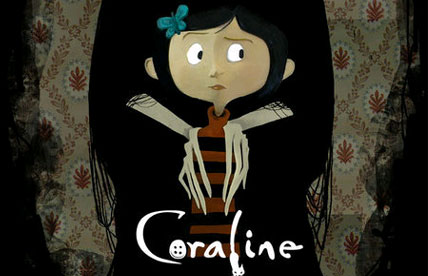
My school doesn't have English Camps. Many high schools don't. So, this summer rather than teach 60 hours to three or four students who would want to sign up for a camp with me here in Daehakdong, I volunteered to teach at two English Camps for middle schoolers. I was a mad commuter on crutches with my broken foot but was very happy to be in Jamwondong at Sindong Middle School for three weeks and Gusandong at Eunpyeong Middle School for one. I finally had a chance to meet other foreign teachers and I must say that I was pleased to make new friends and learn new teaching methods. Having only taught in the University and College classroom, I'm not at all embarrassed to admit that I learn a lot from my colleagues about how to work the secondary-school classroom. Well, or how not to work it. It depends on what I see. I yearn for peer evaluation. This summer was a great opportunity to listen to my colleagues.

At Sindong Middle School, we wanted to provide a couple of fun days during a lengthy camp. We decided to screen a film on one afternoon. I offered up Coraline, which I had just seen and thought the students would like. I expected nobody to be interested, but they were. And the students loved the film. I had no idea. The kids were fixed in their seats, focused, and hung on each scene. Korean audiences can be very expressive. It wasn't difficult to understand how much they enjoyed the break from classes and liked the film. As a result of its reception at Sindong, I decided to show it to students at my school.

Each semester I prepare one or two cultural lessons. We have drawn monsters, discussed superstition, talked about parents as 잔소리군 (jan-so-ri-gun; a nag) and teachers' disciplinary action, thought about hunger and poverty, shared about sports. Anything to give them a break from direct instruction and encourage some critical thinking while using English. The classroom experience here is so rigid, they usually like it. In addition, the students and co-teachers usually have no experience with the material I use. The classes can be fun.

Last Halloween, we talked about Jack-o-Lanterns and Halloween monsters and the students competed in groups of six to create the most interesting monster concept. The winning group in each class received a bag of Halloween candy that I prepared. This year, I decided to try to create a multi-week project with Coraline. I've recently got into the habit of creating four-week blocks of lessons that have their own focus. It gives the students time to develop a way to use the language they're learning in my classes. I didn't know how my coteachers would be react to me wanting to show a film, so at a department meeting I only mentioned showing the film as a Halloween treat and admitted we'd only have time to watch 50-minutes or half the film. The students enjoyed the film so much my co-teachers insisted we finish it the following week. I thought this would happen and it permitted me to add in our next meeting that I had some ideas for two more lessons using the film content as material.

My co-teachers are thrilled, as you can imagine, because for the next few weeks they need not worry about this part of their jobs. And they are tickled because we agreed about something quite naturally: Coraline is a good film, it's interesting, it's useful, and the students are happy. Honestly, I hadn't thought about the language level of the film. But it's intermediate (vocabulary and usage) to advanced intermediate (speed of dialogue.) I used the Korean subtitles, but in my future lessons I can implement the actual vocabulary from the film without any difficulties. One significantly Korean aspect of the film is Coraline's relationship with her mother and father. Her mother is a sympathetic character as well as a real nag, her father can be distant but has her complete admiration, and Coraline is a bit of a princess. It's hard to summarize this complex relationship so quickly in this blog post; forgive me. What's important is that the kids totally get her and her parents. I couldn't be more fortunate because I hadn't considered that they'd necessarily get everything about the relationships in the film. Sometimes I'll show them something or use an example in class that I'm sure they'll understand and I'm just way off base with their gist of families and culture.

While Coraline is not flawless, it's a visual delight. It's heart is very big. And it's not weird for weirdness sake, which it could have been had Tim Burton gotten his hands on it. It's wonderful to have 100 minutes of class-time spent in silence for 20 classes of peace of mind. And it's a good break for the hard-working teachers here. I've gotten a kick out of watching my kids peacefully sitting, trying to have fun.

We decided to use two of our many ideas to make a four-week block of classroom activities. Two classes around Halloween to watch the film, its 97 minutes, followed by two classes of lessons using Coraline's characters and themes. I'm focusing on a Fantasy/Reality lesson that will teach 1) new vocabulary with a focus on synonyms and antomyns, 2) cultural usage of American English and 3) group work and presentation of material in class. I've got speaking and writing covered as well. This lesson will encourage students to think about how to express their fantasies in contrast with their realities. It will encourage translation via bilingual discussion in group work. Something I wholeheartedly support. My English Classroom is purposefully bilingual. (I hate the English Only crap teachers pull here. As if the kids aren't using Korean when they use English.) We'll also get the class to create a marketing campaign for the film as if they were marketing it for Korean audiences. In short, ads for the film using pens, craypas and paper.

All in all, Coraline was a wonderful way to work on a Halloween/Autumn set of lessons without resorting to awful lessons about culture that nobody cares about, like "My Teacher's version of the source of Halloween" or "My Teacher's version of the meaning of Thanksgiving and how it relates to Chuseok (because My Teacher needs to assimilate everything in order to teach it)" or "My teacher is an individual who has a different take on Halloween and Thanksgiving than other foreigners and this makes my Teacher cool, or so she thinks."

Anyway, my hour of free-time is up and I'm off to teach. Please feel free to share your Autumn lessons in the comments and/or provide links and/or criticism.

Possibly Useful Links: Henry Selick, Neil Gaiman, Coraline Wiki, Coraline Movie, Coraline IMDB.

Wednesday, November 4, 2009

Purchasing a Scooter in Seoul

This can be a rather daunting project. Who do you trust? At least, that's how I approached the matter. I am a scooterist in the States and have experience buying scooters: one modern and several vintage. In my opinion, two things matter most: knowledge and trust.

Trust is difficult away from home. Not speaking but a little Korea and knowing that much is lost in translation, I was worried about walking into an autobike shop and negotiating with an ajossi about a new or used ride. The prospect of shopping via Craigslist or 4OKs was equally as aggravating. Many foreign scooterists in Seoul know nothing about the machine they are riding. Understandably, they have absolutely no idea about their scoot's condition.

Take my advice, I'd stay away from a bike being sold by a temporary, foreign owner unless you have someone you trust check it out first. (Even if you know the person selling the bike. Nothing like a bad sale to ruin a friendship. Trust me. I've seen it happen.) Buying a scooter from somebody because the bike looks good and not knowing anything about its history could very well be a ticket to a hospital bed. Scooters are simple machines, certainly, but because they are simple it doesn't take much for them to become dangerous modes of transportation. Remember we don't have garages here in which to get under a bike and check it out on a monthly basis. People, especially foreigners, ride their scoots until they break. Then have them fixed cheaply. Then ride some more. Why would you be willing to give money for that bike without first knowing about the bike? A bad front fork from slamming the scoot down curbs and in and out of street holes or a weak braking system and you're in trouble. Just sayin.^^

So, first there's trust. And I'm picky. I didn't like a lot of what I saw, though I wanted something specific. In the end, Praise and I began planning to go to shops and sussing out a trustworthy ajossi. What we learned is priceless.

First, find an ajossi who wants to do business with a foreigner to increase his own business and this guy will bend over backwards to find you the scooter you want. They're easy to find because most small business owners in Seoul operate via word-of-mouth. If an ajossi wants your business, he'll tell you as much because he'll see you as a good investment. If he's uninterested in your business, he'll ignore you and I'd suggest going to a shop where you're not ignored.

Of course, you're going to pay a little more than you would if you bought from a foreigner exiting country. But I can tell you the experience is worth 20-30 manwon more. There'll be a finder's fee of around 10manwon and the scooter will be worth more, too.

I should say that the guy who helped us hooked us up with a scooter with less than 700km that goes in the US for 2800$ for what came to 900$. In Korea, the Bella goes for around 1.8 to 2.0 million won, and we bought it for half that. He basically sold me a new, 125cc scoot from Suzuki that is popular in each international market under various names (in the US, Genuine sells it as The Buddy,) with a good reputation for being a solid performer, for almost 60% off. I'm ecstatic.

But it wasn't luck and it wasn't only my knowledge of scooters. Anybody can get this deal. The only reason my seller did this was because I'm a foreigner and he wants other foreigners to come to him to buy scooters. He made an investment. He could have held that scoot and sold it to somebody else for 1.3-1.6 million won. Now I don't know how he got the scooter and, quite frankly, I don't care. It wasn't stolen or abused or in an accident, so I don't need to care.

I was going to make offers on used scooters on store lots until I got a good deal. But there are so many Chinese scooters around it was looking as if to be safe I'd have to buy a new scoot. Let me make it clear to my friends reading this: those Chinese-market scooters may look cute and be cheaper but they will end up costing you more because you constantly repair them or you will be in an accident. Either way, it's heartache. Don't buy them. It's super-simple in Seoul to find a used Korean (Daelim,) Taiwanese (Kymco,) or Japanese (Suzuki) scooter for between 80 and 150manwon.

In addition, it is highway robbery to pay for a popular scooter like a Genuine Stella or a Piaggio Vespa in Korea because it will cost you at least 2,300$ to ship it home. You simply will not find a buyer who will pay you what it's worth when you leave Korea. They are expensive new and you'll want at least half back for what you've paid. The nice scooters, the vanity scooters, are far too expensive in Korea because only rich Koreans ride them. Even the restored vintage scooters are cheaper here than Italian or knock-offs like the LML or Genuine Stella. In addition, I've been riding my scoot for 300km and I can tell you that Seoul is murder on a scooter. Without a garage and tools and parts, a good vintage or fancy modern scoot is like throwing money away. Anyway, I'm getting off point.

I was going to make an offer on a used scoot but the ajossi at the store asked me what I wanted. I had told him that I was in a scooter club in the US and that I knew how to work on scooters and knew what I wanted. He immediately told me not to buy the used scoots on his lot because I'd have trouble. So, trust is good folks but knowledge is how you find a deal. He knew he couldn't sell me the junk because I was looking under the bikes and checking out wear and tear and asking questions. And wouldn't you know it, he said he'd find me a bike. In 48 hours, I was riding with Praise on the back of a cute, durable and stylish modern scooter that was like new for almost a third of the price.

I'll hook anybody up with this man. And when I have time this weekend, I'll be taking some more photos of my bike and his shop. I'll post the info. I told him I would. If you're looking now, get in touch with me and I'll send you his info. He doesn't speak English. You will need somebody who is fluent in Korean.

So, photos to come and some more scooting in Korea info as I have stories to come.