Friday, January 8, 2010

Great Show tomorrow in Hongdae at Club Spot

The proceeds from tomorrow's show--featuring great hardcore, punk, screamo, and melodic stuff--the proceeds go to support Seoul Women's Hotline, a women's shelter. Come hang out. I'll buy *you* a drink. Will be out with my camera. If you're coming, let me know.

In other news, dagSeoul is back.^^


Saturday, November 14, 2009

coming up

scooterist in seoul, getting your Korean driver's license, Halloween with my students, photographs, taxi ajossi, reflecting on attitudes toward foreigners and our reaction to them.

As well, I love the food here. This is not a food blog, but I really want to write a few posts about the kinds of food I eat and where I go to get it.

Tuesday, November 10, 2009

Earning My Students' Focus: Coraline, Halloween, New Lessons

I mean it how I wrote it. As opposed to "keeping my students focused," which is what some ESL/EFL teachers do over here. Visit YouTube or Facebook and you'll find dozens of classroom clips of young, ESL teachers (and older expats as teacher) playing clown and entertaining their classes while not teaching anything of use about language, its meaning or utility.

It's frustrating to think I might have to be evaluated someday by a foreigner who believes this is useful and good teaching; moreover, it's depressing to realize that many Korean EFL teachers think this is what praxis boils down to in the US, in my case, when it's decidedly not.

The powerpoint presentation has become the signifier of a lesson that often simply doesn't exist and teachers not-teaching stand in front of their projections babbling on and on about what they want to teach but won't actually get around to teaching. Some do this in various characters they create as they attempt to perform in front of the students. I don't know who's kidding who here, but it's apparent that a few students think they're learning when they're being only mildly entertained and a few Korean co-teachers think they're working with a smart teacher who's actually nothing more than an egomaniac while the rest of us watch in shock as we try to learn how to build a valuable pedagogical community that can promote worthwhile teaching practices. I blame capitalism and boredom for this development and implementation of technology in classrooms. We have a shut up and watch this culture of conspicuous consumption. We like treating students like they're consumers. But I'm getting off topic.

I know many of my colleagues work very hard to create useful lessons that help their students use English more effectively and help them feel as if they are coming to an intermediate mastery of usage. I'm not going to stick up examples because I know some of these people and I think their hearts are in the right place. I just gag every time I see a newly published video with amateur theatrics passed off as useful teaching and progressive pedagogy.

Onto Coraline.
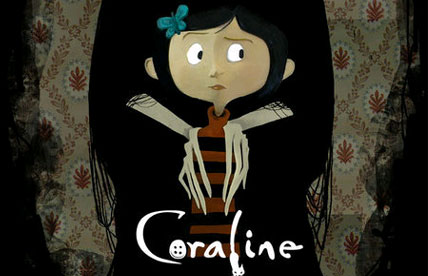
My school doesn't have English Camps. Many high schools don't. So, this summer rather than teach 60 hours to three or four students who would want to sign up for a camp with me here in Daehakdong, I volunteered to teach at two English Camps for middle schoolers. I was a mad commuter on crutches with my broken foot but was very happy to be in Jamwondong at Sindong Middle School for three weeks and Gusandong at Eunpyeong Middle School for one. I finally had a chance to meet other foreign teachers and I must say that I was pleased to make new friends and learn new teaching methods. Having only taught in the University and College classroom, I'm not at all embarrassed to admit that I learn a lot from my colleagues about how to work the secondary-school classroom. Well, or how not to work it. It depends on what I see. I yearn for peer evaluation. This summer was a great opportunity to listen to my colleagues.

At Sindong Middle School, we wanted to provide a couple of fun days during a lengthy camp. We decided to screen a film on one afternoon. I offered up Coraline, which I had just seen and thought the students would like. I expected nobody to be interested, but they were. And the students loved the film. I had no idea. The kids were fixed in their seats, focused, and hung on each scene. Korean audiences can be very expressive. It wasn't difficult to understand how much they enjoyed the break from classes and liked the film. As a result of its reception at Sindong, I decided to show it to students at my school.

Each semester I prepare one or two cultural lessons. We have drawn monsters, discussed superstition, talked about parents as 잔소리군 (jan-so-ri-gun; a nag) and teachers' disciplinary action, thought about hunger and poverty, shared about sports. Anything to give them a break from direct instruction and encourage some critical thinking while using English. The classroom experience here is so rigid, they usually like it. In addition, the students and co-teachers usually have no experience with the material I use. The classes can be fun.

Last Halloween, we talked about Jack-o-Lanterns and Halloween monsters and the students competed in groups of six to create the most interesting monster concept. The winning group in each class received a bag of Halloween candy that I prepared. This year, I decided to try to create a multi-week project with Coraline. I've recently got into the habit of creating four-week blocks of lessons that have their own focus. It gives the students time to develop a way to use the language they're learning in my classes. I didn't know how my coteachers would be react to me wanting to show a film, so at a department meeting I only mentioned showing the film as a Halloween treat and admitted we'd only have time to watch 50-minutes or half the film. The students enjoyed the film so much my co-teachers insisted we finish it the following week. I thought this would happen and it permitted me to add in our next meeting that I had some ideas for two more lessons using the film content as material.

My co-teachers are thrilled, as you can imagine, because for the next few weeks they need not worry about this part of their jobs. And they are tickled because we agreed about something quite naturally: Coraline is a good film, it's interesting, it's useful, and the students are happy. Honestly, I hadn't thought about the language level of the film. But it's intermediate (vocabulary and usage) to advanced intermediate (speed of dialogue.) I used the Korean subtitles, but in my future lessons I can implement the actual vocabulary from the film without any difficulties. One significantly Korean aspect of the film is Coraline's relationship with her mother and father. Her mother is a sympathetic character as well as a real nag, her father can be distant but has her complete admiration, and Coraline is a bit of a princess. It's hard to summarize this complex relationship so quickly in this blog post; forgive me. What's important is that the kids totally get her and her parents. I couldn't be more fortunate because I hadn't considered that they'd necessarily get everything about the relationships in the film. Sometimes I'll show them something or use an example in class that I'm sure they'll understand and I'm just way off base with their gist of families and culture.

While Coraline is not flawless, it's a visual delight. It's heart is very big. And it's not weird for weirdness sake, which it could have been had Tim Burton gotten his hands on it. It's wonderful to have 100 minutes of class-time spent in silence for 20 classes of peace of mind. And it's a good break for the hard-working teachers here. I've gotten a kick out of watching my kids peacefully sitting, trying to have fun.

We decided to use two of our many ideas to make a four-week block of classroom activities. Two classes around Halloween to watch the film, its 97 minutes, followed by two classes of lessons using Coraline's characters and themes. I'm focusing on a Fantasy/Reality lesson that will teach 1) new vocabulary with a focus on synonyms and antomyns, 2) cultural usage of American English and 3) group work and presentation of material in class. I've got speaking and writing covered as well. This lesson will encourage students to think about how to express their fantasies in contrast with their realities. It will encourage translation via bilingual discussion in group work. Something I wholeheartedly support. My English Classroom is purposefully bilingual. (I hate the English Only crap teachers pull here. As if the kids aren't using Korean when they use English.) We'll also get the class to create a marketing campaign for the film as if they were marketing it for Korean audiences. In short, ads for the film using pens, craypas and paper.

All in all, Coraline was a wonderful way to work on a Halloween/Autumn set of lessons without resorting to awful lessons about culture that nobody cares about, like "My Teacher's version of the source of Halloween" or "My Teacher's version of the meaning of Thanksgiving and how it relates to Chuseok (because My Teacher needs to assimilate everything in order to teach it)" or "My teacher is an individual who has a different take on Halloween and Thanksgiving than other foreigners and this makes my Teacher cool, or so she thinks."

Anyway, my hour of free-time is up and I'm off to teach. Please feel free to share your Autumn lessons in the comments and/or provide links and/or criticism.

Possibly Useful Links: Henry Selick, Neil Gaiman, Coraline Wiki, Coraline Movie, Coraline IMDB.

Wednesday, November 4, 2009

Purchasing a Scooter in Seoul

This can be a rather daunting project. Who do you trust? At least, that's how I approached the matter. I am a scooterist in the States and have experience buying scooters: one modern and several vintage. In my opinion, two things matter most: knowledge and trust.

Trust is difficult away from home. Not speaking but a little Korea and knowing that much is lost in translation, I was worried about walking into an autobike shop and negotiating with an ajossi about a new or used ride. The prospect of shopping via Craigslist or 4OKs was equally as aggravating. Many foreign scooterists in Seoul know nothing about the machine they are riding. Understandably, they have absolutely no idea about their scoot's condition.

Take my advice, I'd stay away from a bike being sold by a temporary, foreign owner unless you have someone you trust check it out first. (Even if you know the person selling the bike. Nothing like a bad sale to ruin a friendship. Trust me. I've seen it happen.) Buying a scooter from somebody because the bike looks good and not knowing anything about its history could very well be a ticket to a hospital bed. Scooters are simple machines, certainly, but because they are simple it doesn't take much for them to become dangerous modes of transportation. Remember we don't have garages here in which to get under a bike and check it out on a monthly basis. People, especially foreigners, ride their scoots until they break. Then have them fixed cheaply. Then ride some more. Why would you be willing to give money for that bike without first knowing about the bike? A bad front fork from slamming the scoot down curbs and in and out of street holes or a weak braking system and you're in trouble. Just sayin.^^

So, first there's trust. And I'm picky. I didn't like a lot of what I saw, though I wanted something specific. In the end, Praise and I began planning to go to shops and sussing out a trustworthy ajossi. What we learned is priceless.

First, find an ajossi who wants to do business with a foreigner to increase his own business and this guy will bend over backwards to find you the scooter you want. They're easy to find because most small business owners in Seoul operate via word-of-mouth. If an ajossi wants your business, he'll tell you as much because he'll see you as a good investment. If he's uninterested in your business, he'll ignore you and I'd suggest going to a shop where you're not ignored.

Of course, you're going to pay a little more than you would if you bought from a foreigner exiting country. But I can tell you the experience is worth 20-30 manwon more. There'll be a finder's fee of around 10manwon and the scooter will be worth more, too.

I should say that the guy who helped us hooked us up with a scooter with less than 700km that goes in the US for 2800$ for what came to 900$. In Korea, the Bella goes for around 1.8 to 2.0 million won, and we bought it for half that. He basically sold me a new, 125cc scoot from Suzuki that is popular in each international market under various names (in the US, Genuine sells it as The Buddy,) with a good reputation for being a solid performer, for almost 60% off. I'm ecstatic.

But it wasn't luck and it wasn't only my knowledge of scooters. Anybody can get this deal. The only reason my seller did this was because I'm a foreigner and he wants other foreigners to come to him to buy scooters. He made an investment. He could have held that scoot and sold it to somebody else for 1.3-1.6 million won. Now I don't know how he got the scooter and, quite frankly, I don't care. It wasn't stolen or abused or in an accident, so I don't need to care.

I was going to make offers on used scooters on store lots until I got a good deal. But there are so many Chinese scooters around it was looking as if to be safe I'd have to buy a new scoot. Let me make it clear to my friends reading this: those Chinese-market scooters may look cute and be cheaper but they will end up costing you more because you constantly repair them or you will be in an accident. Either way, it's heartache. Don't buy them. It's super-simple in Seoul to find a used Korean (Daelim,) Taiwanese (Kymco,) or Japanese (Suzuki) scooter for between 80 and 150manwon.

In addition, it is highway robbery to pay for a popular scooter like a Genuine Stella or a Piaggio Vespa in Korea because it will cost you at least 2,300$ to ship it home. You simply will not find a buyer who will pay you what it's worth when you leave Korea. They are expensive new and you'll want at least half back for what you've paid. The nice scooters, the vanity scooters, are far too expensive in Korea because only rich Koreans ride them. Even the restored vintage scooters are cheaper here than Italian or knock-offs like the LML or Genuine Stella. In addition, I've been riding my scoot for 300km and I can tell you that Seoul is murder on a scooter. Without a garage and tools and parts, a good vintage or fancy modern scoot is like throwing money away. Anyway, I'm getting off point.

I was going to make an offer on a used scoot but the ajossi at the store asked me what I wanted. I had told him that I was in a scooter club in the US and that I knew how to work on scooters and knew what I wanted. He immediately told me not to buy the used scoots on his lot because I'd have trouble. So, trust is good folks but knowledge is how you find a deal. He knew he couldn't sell me the junk because I was looking under the bikes and checking out wear and tear and asking questions. And wouldn't you know it, he said he'd find me a bike. In 48 hours, I was riding with Praise on the back of a cute, durable and stylish modern scooter that was like new for almost a third of the price.

I'll hook anybody up with this man. And when I have time this weekend, I'll be taking some more photos of my bike and his shop. I'll post the info. I told him I would. If you're looking now, get in touch with me and I'll send you his info. He doesn't speak English. You will need somebody who is fluent in Korean.

So, photos to come and some more scooting in Korea info as I have stories to come.

Monday, October 26, 2009

Google Fix: No Country Redirect

Little did I know.

I have Google set as my home page in Firefox.  Not that I'm there that often, but I use Google Reader almost every day.  Google.com always redirects to google.co.kr by default.  I think Google does this for better results while searching in any given region.  Problem with Google's Korea site is that it takes almost a minute to load.  I just discovered Google's NCR option, which stands for "no country redirect."

I set my home page url to "google.com/ncr" and "google.com" pops up immediately.  No more minute long waits to get working online.  I love it.

Wednesday, October 21, 2009

The Spasmodic Contraction of the Diaphragm that Repeats Several Times a Minute

I had the hiccoughs yesterday for 12 hours. Tiring, annoying, and heartburn inducing. I could not write. Something I ate, I'm sure of it. Still bloated. I really hate being bloated.

(cross-posted on dagzine)

Friday, October 16, 2009

Halloween Class: the early talks

For some reason, my coteachers think permitting the kids to have a costume contest for Halloween is a bad idea.

More on this later. Too bad for them I got them to agree to let the students vote on it. What kids aren't going to want to work in groups making costumes, then judge each other to pick the best costumes for each class?

They'll love it.

Stay tuned for an mini-series of posts where I share with my readers how incredibly difficult it can be to create lessons at a Korean high school.

A little 찜질방 in your home.

We Are Family by Ole Jensen & Claus Molgaard | materialicious

Posted using ShareThis

Friday, October 9, 2009

Korea: Things I don't Understand

I don't understand why Korean adults are intimidated by children. I guess a HOW might be better than a WHY. I know why children and young adults scare older adults and parents. But this is a peculiar kind of intimidation. Maybe I'll address it more as I think more about it. (UPDATE:  see the comments.)

From government to parents, every child leads a highly-structured life. After middle school, which ends at what most of my readers know as Freshman Year, students move on to High School and become the scariest thing Korean adults encounter on a daily basis.

High School women might rank as the most intimidating group of youth. In 대학동 (my neighborhood Daehakdong,) the young women from my school congregate mornings and afternoons off campus. They lurk in tiny alleys and in the alcoves of buildings just off the street. In these little spaces, they gossip, sing songs, and smoke cigarettes. They bully each other, make friends, tell horror stories about school, and talk about romances and fantasies.

Any noise in Korea is frowned upon by folks over 30. If you or you and your friends are being loud, you'll hear about it. That groups of school children scream and yell their way to school every morning is proof enough for me that Korean adults don't like to speak to children. But this isn't a simple dislike. These kids can pretty much get away with what they like.

On my walks to and from school, I often catch them smoking. They don't like to be caught. I'll often crush their cigarettes. But my teasing and hassling them is far less punishment than they'll receive if their homeroom teachers smell smoke on them in class.

Imagine waking up to a group of ten, 18-year-old women standing under your window shouting and smoking. They're screeching and screaming and their smoke finds its way into your flat. I can't think of anything more irritating. Especially at 715 in the morning. When I see it, I chase the students away scolding them for being rude and unhealthy. The ajumma and ajossi refuse to speak to the high school students and tolerate the daily annoyances. I asked my colleagues and was told "Koreans are intimidated by school children." I thought it couldn't be that. But after a year, I've realized that the students, especially high school students, have an incredibly bizarre power over adults, even their parents. And some students, those wise to their black magic, really torture the adults.

I've never seen anything like it. And I don't understand it. Because the students' powers vanish as soon as you step into their private space and ask "What's up?" They giggle, give up the power and scatter.

It's one of those things I find both cute and disturbing. What do you think? Have you noticed this? Do you have any similar stories of the young men and women turning the tables on their oppressive authority figures?

Who's Afraid of Korean Students? (Their parents....)
IMG_3197.JPG


Wednesday, October 7, 2009

Wednesday Music: "Onions" Versions, 1974 & 1973


나 어떡해 by Sand Pebbles


"What Should I Do?"- Sand Pebbles, from a 1977 MBC broadcast.

I love this song.  Please share any audio files you have with me.  Or videos.  I'm always looking for lps, too.

Wednesday, September 30, 2009

Midterm Week Ends

I spent the last week sitting in classrooms watching my students take multiple choice tests. It's a frustrating week for me. I struggled with multiple choice tests. I read slowly and I have no ability to focus on something like that for more than 20 minutes. Though I was always able to perform well on standardized tests, I know I often knew the right answer because I could eliminate the wrong answers. I much prefer essays and short answers: I can almost always write what I know clearly enough to communicate I know what I'm talking about.

Anyway, tests like these are not about evaluating a student's knowledge, they're more about finding a place for the student in his class of students. In Korea, they're used to rank students, regardless of their knowledge.

I'm happy for my kids that they'll get to spend several days with their families for Chuseok. And in 3 hours, I'll be away from school until Tuesday.

I have to prepare a couple of lessons tomorrow.
I'm meeting Praise's relatives on Saturday.
The weather is slowly turning cool and dry.
I won't miss the humidity.

The hiking is wonderful this time of year.
The leaves begin to change and fall and
late flowers are in bloom.

Maybe I'll head up Gwanaksan are Suraksan this weekend, or both.

Tuesday, September 29, 2009

One Year Down, Two to Go

A year has passed. A little too quickly for my pleasure. Nevertheless, I'm very happy with Seoul.

I'm writing this post in a PC bang. The Internet connection in my apartment is great some days, slow others. I head to the PC bang whenever I want to use youtube and facebook, or stream video and radio.

I'm a fan of MonkeyTown. In 대학동(Daehakdong,) it's one of the only PC bangs that's non-smoking and where the computers and PC stations are kept clean. I keep an account with them: for $35, I'm able to utilize a personal login and work for 47 hours. My last payment has lasted the entire summer and I have 11 hours left as of this post. Pretty good deal.

I live in what was recently known as 신림9동 (Sillim 9 dong.) Sillimdong was an 11 district neighborhood within 관악구 (Gwanakgu,) the most populated area of Seoul. My neighborhood is now known as Daehakdong. Daehak means academy or college as it points to where students assemble and dong is a place where we live like a neighborhood. It's a good name. The neighborhood is home to students of Seoul National University as well as 고시 (goshi) students who are studying for law tests, like the bar in the US.

From what I can gather, all the old Seoul neighborhoods where the poor lived and are undergoing slow gentrification are being re-named. Not that anything progressive is being done to combat poverty in old Sillim; the buildings, on the other hand, are being renovated and folks are taking advantage of the cheaper real estate.

I've promised myself to post more. I want to get back to posting once a day. I have little scrapbooks filled with notes and miscellany. I really should be getting my more of my thoughts down.

I'm going to begin looking for office space to write. Most likely, I'll rent a little room like the law students do while in Seoul for several months studying for their exams. I'm working on my novel again. Finally. I'm no hermit while I write. If anything, I'm more social, more energetic. I certainly sleep less, dream more, and I consume more text.

I'll try to get some photos of my neighborhood up.

Monday, September 7, 2009

I'm back to work in Seoul and will have the blogging thing happening again. Am trying to get a revision of the blog design up by tonight--tomorrow morning for some of you.

^^

Monday, August 17, 2009

In Berlin

First day in Berlin has begun well. I had a breakfast containing the staple western foods I have craved since moving to Seoul. I had sourdough rolls with cheese and nutella. Now, the nutella is not a staple of my diet, but I love it. In Seoul, it is too expensive and often demands a trip to a distant international foods market. But cheese and white bread. White bread without sugar.

First night in Germany--last night--was almost surreal. More later.

Wednesday, May 27, 2009

Comment Moderation

Comments have not been working on DagSeoul. I discovered that the combination of settings I had selected was causing the problem on some browsers--most. I fixed the problem. Comments should appear in a pop-up box now after the Comments link is selected.

I really wish that I could get the comments to appear below my text so that readers could see their posts in conjunction with mine. I like that. But when I set this function in Blogger, it never works properly.

Please continue to inform me of any probs with the functioning of my blog. Cheers.

Back on the Bus with You (and Your Other-ing Elbow, too)

More than once on this blog, I have tried to address how quick US citizens, especially white folks, are to cry Xenophobia while living in Korea. It's true that Korea has a reputation for being rude to foreigners. People are pushy in the streets; they will look at you, but won't talk to you; they'll even talk about you while looking at you yet ignoring you.

But let's not kid ourselves: this is how foreign others are treated in the US as well as, well every other place I have been come to think about it.

I have yet to experience racism, though. Koreans have told me how rich I am, how lucky I am, how educated I am, etc. They like to draw rough caricatures of me: all end up representing me as an Ugly American of some sort. That is, until I get to know them.

I once got into an argument in my public school classroom with a teacher because I told a student who insisted Americans are all rich that I wasn't and the majority of Americans are not either. I told him, "in fact, we are poor." Speaking on behalf of millions of poor Americans, I felt proud of myself not permitting the nonsense in my classroom. My co-teacher stepped in and mentioned my clothes and then my wealth. After all, I was a traveler and living in Korea. Well, I stopped class. Turned on my laptop (a sign of wealth by the way, and it is and I must admit that,) turned on the projector, and connected the Internet. I showed them the poverty in the US. They shut up. The students ALL apologized. The adult teacher said nothing else about the matter. I had embarrassed her. It's not nice to do that to an adult here. Confucius still clouds daily life in Korea. On the other hand, I wasn't going to permit lies in our class to save her face.

I am a teacher. I am here to teach. I am not in this country to piss and moan about my personal treatment. I am here to work with others. If I were here to make money, to travel, to be tourist, I'd be at a hagwon (a for-profit, language education business) and tutoring. But I believe in public education and I am decidedly not a tourist.

I have found that by engaging my hosts, I am always treated well. Always. But engagement with others is difficult. I understand. I also understand that some people who travel are not cut out for traveling. What many travelers want is to be catered to in a manner that meets the satisfactions they are accustomed to in their native countries and as consumers in their local markets. Or, they want to treat Korea as their Zoo. I think it's unfair to come to a country like Korea and expect to be treated as anything other than other. Unless. Unless you are willing to take some shots, to be hurt, but to push back and insist your permanency in your new local environment.

Each time I return a shove in the street or a rude look or whatever weirdness I am given by a strange Korean I don't know yet, I try to return the action with a smile and some Korean language. If another return is offered it is always kind. The worst thing that happens is that I receive a grimace from an old man or lady. And I love the older Koreans. For what they been through in their lives--occupation and war--they have earned the right to grimace at foreigners in their land.

***5/27, 12:44 pm: It has been suggested to me that my use of "return" above makes it sound like I am returning a shove with a shove-with-a-smile. No. I am using return to implicate the return in discourse. The shove is a speech act. People push me out of the way rather than speak to me for a reason. It means many things, but one of the most significant ideas communicated by the shove is "I don't want to talk with you." I have learned that Koreans are incredibly shy and so are apt to appear incredibly obstinate. I return the shove with a speech act that invites a revision of their act. I think insisting that they "see" me again (revise) is important.***

AND LET US NOT FORGET KOREA'S HISTORY. You all do know that the Korean War has never ended. No treaty was ever signed between the US and Korea. We are still at war with each other. It's worth considering that Koreans know this and that Americans seem to not give a shit. Well, let's be honest. I am willing to wager that more than half of the foreigners in Korea, American or not, do not know this.

It is not an exaggeration for me to say that most foreigner teachers (not the students) I meet, including the Korean-Americans here know less than I do about Korean history, geography, and its local culture. Even the foreigners who speak the language well are not necessarily informed. How is this possible?!? Maybe they have read wikipedia. I think this is suspect. I did my homework before coming here and I assumed that others who wanted to live here would feel the same obligation. Well, I actually started doing the homework years ago when I wanted to come here. My point is that there are many reasons for Koreans' lack of trust. Foreigners come here to make money, eat, drink, have sex, make friends, buy stuff, and leave. And many foreign teachers make a lot of money. Many foreign teachers also often talk as if it is their right and privilege to come here and make as much as they want without doing anything. In other words, they do not behave as guests who are asked to be here and granted limited access; they act as if Korea is theirs to do with as they wish. Yes, they are little Imperialists and they are colonizing Korean space. And many Koreans hate it.

I am not going to surprise any high school or University teachers who read DagSeoul by saying this. But I will piss off almost every foreign teacher in Korea who will read this. We do not do much teaching here. The students in hagwons are studying for multiple choice tests. The majority of their teachers are teaching Idiomatic Expressions and some of their teachers are great performers and tell fun stories and use neat technology. In the high school I teach at, I see 20 classes of 35-45 students for 50 minutes once a week. Really. What can I do as a language teacher? Not much. Koreans do not work on composition and do not involve much reading in their language education. They work out of text books that target certain learning areas in language so the students can score well on tests. The students can read English and with prompts in the form of questions written in Korean language, they can tell you some basic things about English syntax and grammar. I do more for my students just talking with them in English, to familiarize them with the language, than I can teach them English.

It was shocking when I first got here. To the point, the majority of "native speaking English teachers" (NSETs) in Korea do not teach much at all. They work. We all work hard here. But most of the NSETs are not teachers. It's obvious talking to some of them that they don't know what they are doing. Now public school teachers here are more with it. But many are young and inexperienced--in fact, here to get experience. I don't understand what the Korean government is thinking bringing new teachers here to teach the English language. They should bring experienced teachers. (And this no offense to recent college grads coming here to teach, have fun, and get experience. Good for you.)

At any rate, the students are my concern. And many NSET folks care more for themselves and their lifestyles as travelers than they do care for their students. In other words, they are not teachers.


Friday, May 22, 2009

Your Korean Big Brother & You: Free Speech & False Courage

The Prosecutor's Office here, which has the kind of authoritarian power DAs and AGs across the United States salivate over, is looking to find ways to make any protest in a public space illegal that--no kidding--"might turn violent."  Basically, this means that any protest would be deemed illegal because the Prosecutor says it isn't a good protest.

***added at 2:24PM: Not many people have been smiling about the Prosecutor's Office seeking to harass and arrest peaceful protestors.  The Prosecutor's Office is looking for a means to be able to insist any protest can be illegal and the determination is to be made by the Office.  This isn't about violence.  If it were, there would be serious ramifications for several members of the police force in Seoul as a result of recent events.  This is about targeting activists and bullying them and/or arresting them.  Let me be clear, a violent protest in Korea is a protest where old people throw raw eggs and vegetable at cars and sometimes people.  Most protests are sit-down candlelight vigils, with singing and prepared speeches read over megaphones.  Moreover, we know how most nonviolent protests turn violent.  The police show up and harass people.  They have many tactics they use to provoke citizens to violent action.  And if those tactics fail, the police beat people with sticks.***


It's strange to live in a place that calls itself a Republic, a democratic republic, but has an elected government that permits such unethical use of power.  After all, a cornerstone for modern Democracy is the ability to peacefully assemble and freely speak.

In Korea, "peaceful assembly" is used against the assemblers.  Everything deemed inappropriate, read not in support of the government and corporate interests, is deemed not peaceful.  In addition, freely speaking is pitched against libel.  If an author publicly disagrees with a corporation on a web forum, for example, the corporation can file a dispute and for 30 days the posting would be suspended while the government, the corporation and you arbitrate about the validity of your claim.  The Korean government, and jawdroppingly many Korean citizens, will argue that this kind of arbitration protects free speech.

Such arbitration should not be considered free speech at any time nor for any reason.  Public criticism is the price of doing business and government.

It's simple.  We make claims.  Our claims, no matter how opinionated, have logic.  Something is explicit and implicit in each of them.  As well, whoever listens to our claims might find reason to, through inference, see things in our claims we did or did not intend.  By requiring real names to be used on blogs and Internet postings and by requiring arbitration about disputed claims, the Korean government proscribes inference from public discourse.  It's incredibly absurd. (I hesitate to write too much about politics on DagSeoul for a reason.  I'm not going to link to anything in this post.  Safe to say all news about protests, arrest of protestors, prosecution of bloggers, laws about blogging and posting online from mainstream news agencies in Korea will tell the story I have summarized whether the author or agency sympathizes with the laws/rules or not.)

In the United States and in much of Europe, free speech is an act.  We choose not to define speech acts because to regulate such acts might proscribe them and future acts, whatever they might be.  Such freedom permits and encourages active and aggressive exploration of the possibilities speech has to offer.  And much of our debate becomes centered on what speech acts are, not how to prohibit them.

In Korea, there is much handwringing about the difference between free speech and what we can call false courage.  Free speech is whatever is freely uttered in public that is proved to be correct.  False Courage, when applied to speech, is applied to anything the government says is not correct.  Or, that citizens find scary.  Certainly, I do not fully understand what Koreans who use it mean by false courage, but I understand what it means in the Western Tradition.  We might talk about false courage in an ethics course when we discuss the application of courage and the precision, accuracy, timeliness, what have you of its application.  The problem with associating false courage with free speech is that it punishes the person who is brave enough to step into the public discourse and speak his or her mind freely.

One thing we learn as teachers, even after only a few years of dedicated teaching, is that students who speak their minds make mistakes.  A good teacher has to come to terms with cultivating active learning in public spaces that permit mistakes.  A poor teacher in any department is inevitably a teacher who refuses to permit student mistakes.  Another way to put this:  the teachers who consistently punish mistakes by lowering grades or subtracting point are not good teachers.  Such teachers are good cops maybe, good purveyors of State Ideology maybe, but they never produce students who can critically think and write well.  Nor do they produce students who enjoy education.

Students who speak their minds will only speak their minds freely when they know they are permitted, at times encouraged, to make mistakes.  When we say that free speech that is mistaken, for whatever reason, is false courage--that to speak freely somebody must speak correctly, then we proscribe the freedom from speech.  It's really that simple.  And without free speech people do not speak, and people who do not speak do not learn.

And what is a public debate without the peanut gallery?  False Courage is a tool the ruling classes use to justify labeling any group or individual who disagrees with their minority conensus opinion as uninformed and stupid, a group or individual who should not be permitted to speak.

I often wonder why the Korean classroom is so silent.  Ask the students a question, they will not answer.  They will sit silently and await a cue that gives them permission to speak.  A teacher need not give them the answer, but the kids want a cue--they will often ask politely for a hint--about how they should answer.  That cue and the desire to receive it tears my heart in two.

What I miss about the American classroom is the noise.  Don't get me wrong, my classrooms here are noisy.  Adolescents are noisy.  The noise here is based in utter ennui.  My students--sophomores and juniors--get excited about playing bingo and winning prizes.  They are most definitely not excited about learning.  Their burden is learning because they are ranked as a result of their series of multiple choice tests into a line that will utterly determine their future.  The pain associated with this base ranking bleaches the joy from their educational journeys.  In many ways, the educational system infantilizes the Korean student.  And so the aging adolescents would rather play children's games and be rewarded with pieces of candy than be tasked to write three reasonable claims in English about what they think about something that affects their daily lives.

I grew up itching for an argument, I think, as many Americans do.  I couldn't wait to participate in adult discussion.  When I was younger I was always speaking up when I should remain quiet.  I was disobedient to the core.  Still am.  But I was encouraged to direct my energies in such a manner that permitted me to become the teacher I am today--a free thinker who wants to dedicate his life to service to his community.  The disobedient students here are pysically punished, forced to apologize for having a voice, and frightened with a future of poverty if they don't score high enough on their exams to go to a "top Korean university."

And you do know why this conversation turned from free speech to the classroom, too.  Because educational reform in Korea is the key to finding political leaders in the future who will truly transform the Korean government into the Democratic Government the people here have fought so hard for....I didn't write a post on DagSeoul commemorating the two important dates to Korea's struggle for democracy.  Now I have.  I love this country and am obsessed with its history.  I am learning why.  The longer I am here, I am figuring it out.

April 19
May 18

Important dates to remember.


So Free Speech is branded as False Courage here because it can be mistaken.  I think the point of free speech is that even when purposefully saying improper comments, we are free to do so and suffer the consequences.  After all, what does a Republic have to fear of such brazen incorrectness?  Oh wait, I know.  If people are permitted to speak without fear of punishment, they will undoubtedly speak about what troubles them most:  Oppression, Hunger, Poverty, Health, Mistreatment, etc.  All the things governments can't stand listening to.  The Korean Democracy suffers from what ails American Democracy:  both are intolerant of the poor, the working class, and minority interests.

And yes the education system here depresses the shit out of me.  In fact, I think many of the arguments I have had with my partner are based in my general sadness.  My disposition isn't quite right.  I am out of sorts.  But I love my students so much.  I care for them.  I wouldn't leave them.  And of course, I love my girlfriend.  And today I am remembering our trip to Gwangju and keeping in my heart all those who have lost their lives here fighting for their freedom.